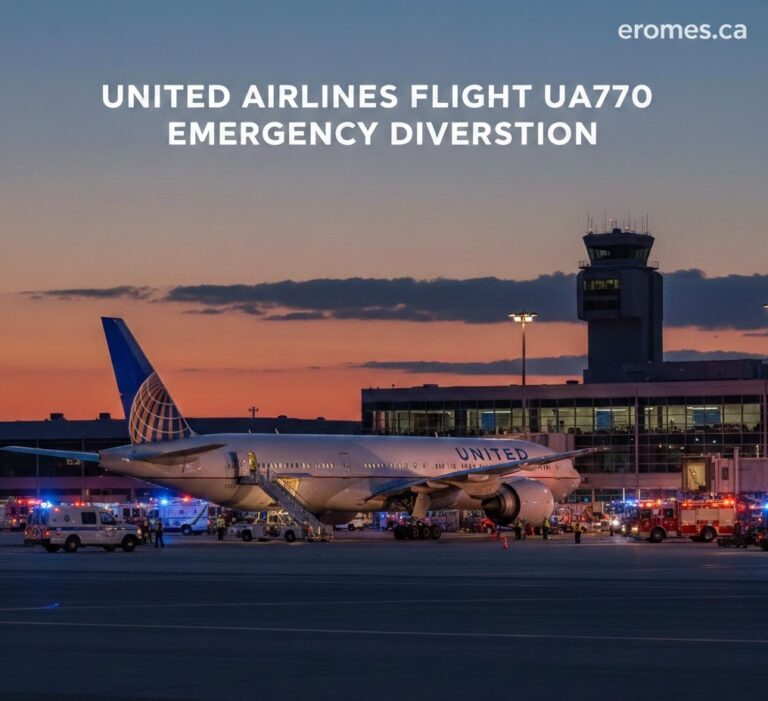
United Airlines Flight UA770 emergency diversion
Passengers aboard United Airlines Flight UA770 emergency diversion never expected their routine journey to turn into a moment of uncertainty thousands of feet above the ground. What began as a standard flight quickly became a reminder of how unpredictable air travel can be — and how critical split-second decisions are in the skies.
As the aircraft climbed to cruising altitude, most travelers were settling in. Some were watching movies, others catching up on rest, and a few scrolling through their phones. Then came the announcement that no passenger ever expects to hear: the flight would not be continuing as planned.
According to early reports and passenger accounts, United Airlines Flight UA770 was forced to divert due to an unexpected onboard situation. While details remained limited in the initial hours, it became clear that the diversion was carried out as a precautionary safety measure — a standard but serious decision in aviation.
Flight diversions are never random. They involve a careful evaluation of multiple factors, including aircraft systems, passenger well-being, weather conditions, and the availability of emergency support on the ground. In this case, the flight crew made the call to change course, prioritizing safety above schedule.
Inside the United Airlines Flight UA770 Emergency Diversion
For passengers, the experience was surreal. One moment they were en route to their destination, the next they were watching the flight path shift on seatback screens. The cabin atmosphere reportedly grew quiet as travelers tried to process what was happening.
Some passengers later shared on social media that the crew remained calm and professional throughout the incident. Clear announcements were made, and flight attendants moved through the cabin offering reassurance. There was no panic — just tension and uncertainty.
While airlines rarely disclose full technical details immediately, such diversions often involve system alerts, medical concerns, or other operational irregularities. Importantly, an emergency diversion does not automatically mean imminent danger. In modern aviation, it often reflects an abundance of caution rather than a crisis.
A Precautionary Landing, Not a Disaster
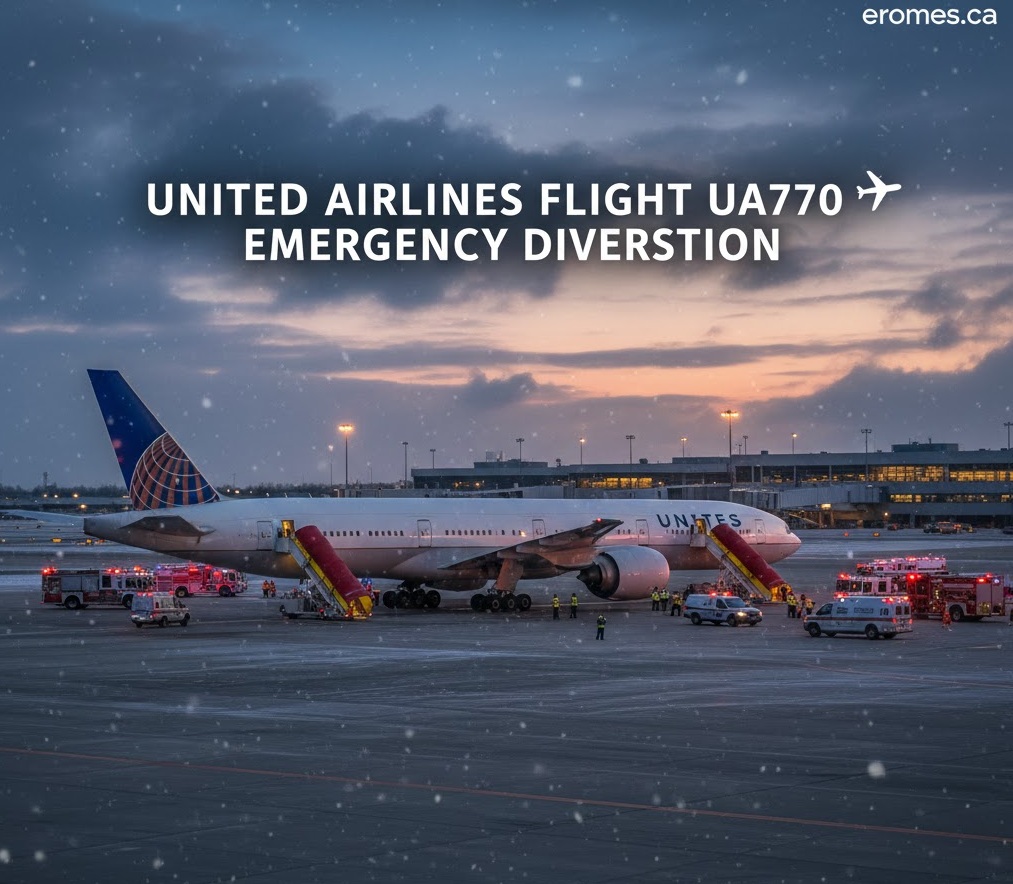
The aircraft ultimately landed safely at an alternate airport, where emergency services were standing by as a precaution. This is standard protocol whenever a flight declares an emergency or deviates from its original plan.
Passengers were allowed to deplane after landing, and United Airlines began the process of rebooking affected travelers and arranging onward travel. No serious injuries were reported, and many passengers expressed relief once they were back on solid ground.
What stands out in incidents like the United Airlines Flight UA770 emergency diversion is how smoothly these complex situations are often handled. From air traffic control coordination to ground response teams, dozens of professionals work behind the scenes to ensure a safe outcome.
Social Media Reacts to UA770
As news of the diversion spread, travelers and aviation watchers quickly took to social platforms. Posts ranged from concern and speculation to gratitude for the crew’s handling of the situation.
Several passengers emphasized how quickly plans can change during air travel. Missed connections, delayed meetings, and altered itineraries became part of the ripple effect — all stemming from a single mid-air decision.
These stories often resonate because they highlight a shared vulnerability. When flying, control is handed over to systems and professionals we rarely see. Events like this pull back the curtain, reminding us of the human element behind aviation safety.
Why Emergency Diversions Happen More Than People Realize
Despite how alarming the phrase sounds, emergency diversions occur more frequently than most travelers realize. Globally, flights divert every week for reasons ranging from mechanical warnings to passenger health concerns.
Modern aircraft are designed to detect even minor irregularities early. When something appears outside normal parameters, pilots are trained to respond conservatively. Continuing to the destination is rarely worth the risk when a safer option is available nearby.
In that sense, the United Airlines Flight UA770 emergency diversion reflects the system working as intended — identifying a potential issue and resolving it before it escalates.
The Human Side of an Unexpected Landing
Beyond the technical aspects, diversions carry a deeply human impact. For some passengers, the delay meant missing important life events. For others, it became an unexpected story they would carry for years.
Moments like these often shift perspective. Travelers who board planes focused only on arrival times are suddenly reminded that safety outweighs schedules. Gratitude replaces frustration once the bigger picture becomes clear.
Several passengers reportedly thanked the crew personally after landing, acknowledging the professionalism shown under pressure.
What Happens After a Diversion?
After a flight diverts, the aircraft undergoes inspections before returning to service. Maintenance teams review logs, systems, and crew reports to identify what triggered the event.
Airlines may also cooperate with aviation authorities to ensure compliance with safety procedures. While not every diversion leads to a formal investigation, each one contributes data that improves future operations.
For passengers, airlines typically offer rebooking, meal vouchers, or accommodations depending on the delay length. While inconvenient, these steps aim to reduce the disruption caused by an unexpected change.
A Reminder of Why Aviation Remains Safe
Incidents like the United Airlines Flight UA770 emergency diversion tend to dominate headlines briefly, then fade from public attention. Yet they quietly reinforce why commercial aviation remains one of the safest forms of transportation.
The absence of injuries, the controlled landing, and the calm handling of the situation all point to systems designed with redundancy and caution in mind.
For travelers, the takeaway is simple: diversions are not failures. They are safety decisions made long before a situation becomes dangerous.
Final Thoughts
The United Airlines Flight UA770 emergency diversion serves as a powerful reminder that every flight carries unseen complexities. While passengers may never know every detail of what occurred onboard, the outcome speaks for itself — a safe landing and lives protected.
The next time a flight path changes unexpectedly, it’s worth remembering that behind the announcement is a decision made to prioritize safety over convenience. In the unpredictable world of air travel, that choice makes all the difference.
About the Author